
Last updated: November 10, 2026. Please read this first: the outbreak described in this article is over. The World Health Organization declared the MV Hondius hantavirus outbreak over on 2 July 2026. It happened in April and May 2026. The reason it is in the news again in November 2026 is a CDC MMWR retrospective report published on 5 November 2026, looking back at what happened and how the world responded. Nothing in this article describes an outbreak happening now. This guide is for information only — it is not medical advice. Always follow your doctor's guidance. Medical disclaimer: this article does not replace professional medical advice; only a doctor can diagnose you, and any medicine must be taken as your doctor advises.
Hantavirus on the MV Hondius: What Happened, Who Died, and What Travellers Should Know
Written by Fatima Nursing Care
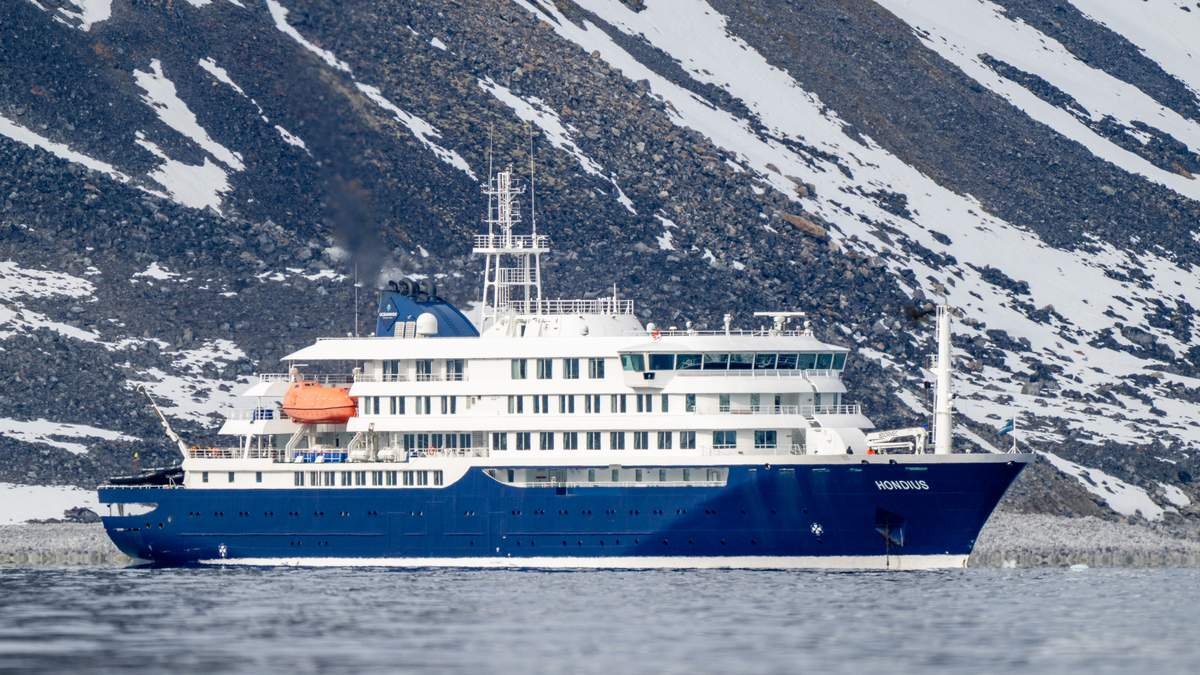
In April 2026, a cruise ship sailing from Argentina towards Europe became the centre of one of the most closely watched infectious-disease responses of the year. The Dutch-flagged MV Hondius was carrying 147 people — 88 passengers and 59 crew from 23 nationalities — when passengers began falling ill with a rare and serious infection: hantavirus pulmonary syndrome, caused by Andes virus. By the time the World Health Organization declared the outbreak over on 2 July 2026, there were 13 cases and 3 deaths. This guide explains what happened on board, who was affected, how the virus spreads — and what it does not do — and what travellers and families should know.
What happened — the short version
The MV Hondius departed Ushuaia, Argentina, on 1 April 2026 on a long voyage that included stops at mainland Antarctica, South Georgia, Nightingale Island, Tristan da Cunha, Saint Helena and Ascension Island. The first passenger fell ill on 3 April. Over the following weeks, more people on board developed fever and breathing problems, and three passengers died. The World Health Organization was notified on 2 May, and what followed was a major international response: the ship was met by health teams in Tenerife, passengers from the United States were flown to a specialist quarantine unit in Nebraska, and contacts were traced in 33 countries. The final count, published by WHO on 2 July 2026, was 13 cases — 12 laboratory-confirmed and 1 probable — and 3 deaths, a case fatality rate of 23%. WHO stated that the outbreak "no longer poses a public health risk and no further related transmission is expected."
Early reports were confusing, and some details in the first news coverage were wrong. The facts in this article follow the World Health Organization, the US Centers for Disease Control and Prevention (CDC) and the European Centre for Disease Prevention and Control (ECDC) — the authorities that investigated and managed the outbreak.
Timeline: from Ushuaia to Rotterdam
- 1 April 2026 — MV Hondius departs Ushuaia, Argentina, with 147 people aboard (88 passengers, 59 crew, 23 nationalities).
- 3 April 2026 — The first passenger develops symptoms — the index patient of the outbreak.
- 11 April 2026 — The first death: a Dutch man, aged 70, dies on board.
- 26 April 2026 — His wife, aged 69, dies on arrival in Johannesburg, South Africa, after being taken ashore. Her infection was confirmed by PCR testing.
- 2 May 2026 — The third death: a German woman, aged 79. The World Health Organization is notified the same day. At this point WHO reports 7 cases (2 confirmed and 5 suspected) and 3 deaths.
- 4 May 2026 — WHO publishes its first Disease Outbreak News report. The ship is moored off Cabo Verde. WHO assesses the risk to the global population as low.
- 6 May 2026 — Patients are evacuated to the Netherlands and Germany. Molecular testing confirms the cause as Andes virus. The ship's doctor is among those evacuated, gravely ill — and survives as a confirmed case (see the correction below).
- 8 May 2026 — The case count reaches 8. Between 13 and 19 May it reaches 11.
- 10 May 2026 — The ship docks at Granadilla, Tenerife. A 42-day monitoring period for contacts begins (Day 0 = 10 May). Eighteen US passengers are repatriated to the National Quarantine Unit in Omaha, Nebraska.
- 11 May 2026 — Disembarkation in Tenerife.
- 18 May 2026 — The MV Hondius arrives in Rotterdam.
- 2 July 2026 — WHO declares the outbreak over: 13 cases (12 laboratory-confirmed, 1 probable), 3 deaths, case fatality rate 23%.
- 5 November 2026 — CDC publishes its MMWR retrospective on the outbreak — the reason the story is in the news again now.
Who died, and who fell ill — including one important correction
The three people who died were all passengers:
- A Dutch man, aged 70 — died on board on 11 April 2026.
- His wife, a Dutch woman aged 69 — died on arrival in Johannesburg on 26 April 2026. Her infection was PCR-confirmed.
- A German woman, aged 79 — died on 2 May 2026.
A correction worth stating clearly: some early coverage suggested the ship's doctor had died. That is not correct. The ship's doctor was evacuated gravely ill on 6 May and survived as a confirmed case of Andes virus infection. WHO does not name the dead by role, and the three deaths were the Dutch couple and the German passenger above. Ten other people who fell ill also recovered, bringing the final total to 13 cases.
Most of the 147 people on board never became ill. The outbreak was serious — hantavirus pulmonary syndrome can kill up to half of the people it infects in the Americas, and the case fatality rate here was 23% — but it did not spread through the ship the way flu or COVID-19 would. That is because of how this virus spreads, which is explained below.
What is hantavirus — and what is Andes virus?
Hantaviruses are a family of viruses carried by rodents. The World Health Organization notes that there are more than 20 viral species in the family. Different hantaviruses cause different illnesses in different parts of the world: some cause haemorrhagic fever with renal syndrome, mainly in Europe and Asia, while others in the Americas cause hantavirus pulmonary syndrome (HCPS) — a severe illness in which fluid builds up in the lungs.
The virus in the MV Hondius outbreak was Andes virus, confirmed by molecular testing by 6 May 2026. Andes virus is found in South America and is carried by rodents there. It is the only hantavirus with documented limited human-to-human transmission — and that exception matters, because it shaped the whole international response. But it is important to be clear about what that exception is, and what it is not.
For context, hantavirus is not new to our readers in Pakistan and beyond: a different hantavirus — the cause of "mouse fever" — was reported in Russia earlier in 2026, and we covered it in our guide to mouse fever (hantavirus) in Russia. The viruses are related, but the situations are different: the Russian cases were linked to rodents on land, while the Hondius cases happened on a ship that had visited remote South Atlantic islands.
How it spreads — and the one exception
According to the CDC, hantavirus usually spreads when people breathe in dust contaminated with rodent urine, droppings or saliva, especially in enclosed spaces. It can also spread through contact with infected rodents or contaminated surfaces, and rarely through a rodent bite or scratch. This is why the advice for rodent-contaminated places is so specific: never dry-sweep or vacuum droppings — dampen the contaminated area first, wear gloves and a mask if you must clean it, and wash your hands afterwards.
Andes virus has one documented exception to this rule: limited human-to-human transmission. It has been seen only with close, prolonged contact — for example between household members or intimate partners — during the early phase of illness. It is not airborne spread like flu or COVID-19. Casual contact, such as sitting near someone or passing them in a corridor, has not been shown to spread it. That distinction is why the response focused on close contacts rather than on everyone who had been near a patient, and why no travel restriction was ever recommended by WHO.
Symptoms and incubation
Symptoms usually begin 1 to 8 weeks after exposure, according to the WHO fact sheet. For Andes virus specifically, the CDC gives an incubation period of 4 to 42 days after exposure. The illness usually starts with:
- Fever, headache and muscle aches — especially in the thighs, hips, back and shoulders
- Fatigue — feeling very tired and weak
- Stomach symptoms — abdominal pain, nausea, vomiting and diarrhoea (about half of patients also have headache, dizziness, chills, nausea, vomiting, diarrhoea or abdominal pain)
In some people the illness then progresses rapidly to hantavirus pulmonary syndrome: cough, shortness of breath, fluid in the lungs and shock. This is the dangerous stage, and it can develop quickly. That is why the guidance is the same everywhere: if you develop fever and breathing difficulty after possible rodent exposure — or after being on a ship or in a place where cases were reported — seek medical care immediately and mention the exposure. Only laboratory testing can confirm hantavirus, so tell the doctor about the possible exposure and let the doctor decide about testing and care.
⚠️ Warning signs — get medical care immediately
Hantavirus pulmonary syndrome can worsen fast. Seek urgent medical care if you have:
- Shortness of breath or difficulty breathing, or a new cough after a fever
- Fever with muscle aches after possible rodent exposure
- Fluid in the lungs, chest tightness, or feeling faint
- Vomiting or diarrhoea with fever that keeps getting worse
Do not wait a few days to see if it passes. There is no licensed specific antiviral treatment or vaccine for hantavirus; care is supportive, and early intensive care improves survival. Tell the doctor or hospital about any rodent exposure or ship travel as soon as you arrive — that one detail can change how quickly you are assessed.
Why a cruise ship made it hard
A cruise ship is a difficult place to manage an outbreak of a rare disease. The Hondius had been at sea for weeks, visiting remote places — mainland Antarctica, South Georgia, Nightingale Island, Tristan da Cunha, Saint Helena and Ascension Island — where medical help was far away. When the first passengers fell ill in early April, nobody on board could have known it was Andes virus: the early symptoms look like flu. Our guide to the China H3N2 flu outbreak explains how easily fever, muscle aches and cough are mistaken for ordinary flu — and on a ship, that confusion costs days.
By the time the cause was known, the ship was carrying people from 23 nationalities who would soon scatter to dozens of countries. A single sick passenger's close contacts could be living on several continents. That is why this became a test of the world's health-security system rather than a single ship's problem — and why the response was graded as a WHO Grade 2 emergency, the level used for emergencies needing a coordinated international response.
The international response
The response was unusually large for 13 cases, because Andes virus is the one hantavirus that can pass between people in close contact, and because the passengers came from so many countries:
- WHO Grade 2 emergency — WHO activated its highest levels of coordination, and its Director-General stated on 7 May that the public health risk was low.
- Contact tracing in 33 countries — around 653 contacts were monitored: 317 high-risk contacts under quarantine or monitoring, and 336 low-risk contacts under self-monitoring, for 42 days from 10 May 2026.
- United States — 18 US passengers were repatriated on 10–11 May to the National Quarantine Unit in Omaha, Nebraska. In total 88 US contacts were followed across 27 jurisdictions. No secondary infections were found.
- Risk assessments — WHO on 4 May called the risk to the global population low; ECDC assessed the risk in the EU/EEA as very low; CDC assessed the risk in the United States as extremely low. No travel restriction was recommended by WHO at any point.
- WHO Europe's own account described the episode as a test of the world's health-security framework — and noted that the system worked: the outbreak was contained, no secondary transmission was recorded outside the ship, and the outbreak was declared over on 2 July 2026.
What travellers and households should do
The outbreak is over, and no travel restriction was ever in place. But the precautions health authorities recommend are worth knowing for any traveller, especially on cruises and trips that include remote or rural places:
- Keep living spaces clean — keep homes and workplaces clean, seal openings rodents can use, and store food securely so rodents are not attracted.
- Clean rodent-contaminated areas safely — never dry-sweep or vacuum droppings; dampen contaminated areas before cleaning, wear gloves and a mask, and wash hands afterwards.
- Air out and inspect unused cabins before occupying them — on a ship or in a holiday cabin, open up and check a room that has been closed for a while before settling in.
- Avoid rodent-infested areas — do not disturb burrows or nests, and do not sleep on bare ground near woodpiles or garbage.
- Wash hands often — hand hygiene remains one of the simplest protections.
- Seek care immediately if fever and breathing difficulty develop — and mention any rodent exposure or ship travel to the doctor.
For families in Pakistan with relatives travelling or cruising, the practical message is simple: this outbreak ended in July 2026, the risk to the general public was assessed as low, and ordinary rodent precautions are enough. If a family member returns from a cruise or a rural trip with fever and breathing difficulty, they should see a doctor the same day and mention where they have been.
Home care for a recovering patient
There is no specific medicine for hantavirus, so recovery after hospital care is about rest and careful watching at home — always under the doctor's guidance. A recovering patient generally needs:
- Plenty of rest in a clean, well-ventilated room, with no visitors who are unwell.
- Plenty of fluids — water, soups and oral rehydration drinks in small, frequent sips, as the doctor advises.
- Close monitoring of breathing — watch for any return of cough, shortness of breath or chest tightness, and keep a simple record of temperature, fluids and symptoms to share with the doctor.
- Follow-up as the doctor directs — attend every follow-up appointment, and call the doctor at once if breathing worsens or fever returns.
For families in Pakistan, a trained home nurse can take over this daily watching at home: checking temperature and breathing, keeping the record for the doctor, supporting rest and meals, and alerting the family quickly if warning signs appear — with the doctor directing the care plan. This matters most for elderly patients and for families where nobody can watch the patient all day. WhatsApp +92 308 3688218 to arrange a certified nurse.
Home nursing care, at your home
WhatsApp us now at +92 308 3688218
Certified & background-verified nurses • 24/7 service • Same-day visits • Karachi • Lahore • Islamabad • Hyderabad • Overseas family updates in your timezone
Frequently Asked Questions
Can hantavirus spread from person to person?
In most cases, no. Hantaviruses normally spread from rodents to people, not between people. Andes virus is the only hantavirus with documented limited human-to-human transmission, and that has only happened with close, prolonged contact — for example household members or intimate partners — during the early phase of illness. Casual contact, such as sitting near someone or passing them in a corridor, has not been shown to spread it.
Is hantavirus airborne like flu or COVID-19?
No. Hantavirus is not spread through the air the way flu or COVID-19 is. People usually catch it by breathing in dust contaminated with rodent urine, droppings or saliva, especially in enclosed spaces, or through contact with infected rodents or contaminated surfaces. A rodent bite or scratch can also transmit it, though rarely. That is why health authorities advise against dry sweeping or vacuuming rodent droppings — dampen the area first.
Is there a vaccine or a specific treatment for hantavirus?
No. There is no licensed vaccine and no licensed specific antiviral treatment for hantavirus infection. Care is supportive, and early intensive care improves survival. Anyone who develops fever and breathing difficulty after possible rodent exposure should seek medical care immediately and mention the exposure, because early hospital care matters.
Should I cancel a cruise to South America because of the MV Hondius outbreak?
No — the outbreak is over. The World Health Organization declared it over on 2 July 2026, and no travel restriction was recommended at any point during the response. The risk to the general public was assessed as low by WHO, very low in the EU/EEA by ECDC, and extremely low in the United States by CDC. Travellers should still follow basic rodent precautions on shore excursions: avoid rodent-infested areas, do not disturb burrows or nests, and do not sleep on bare ground near woodpiles or garbage.
Is the MV Hondius hantavirus outbreak still going on?
No. The outbreak happened in April and May 2026 and the World Health Organization declared it over on 2 July 2026, stating that it no longer poses a public health risk and no further related transmission is expected. The reason it is in the news again in November 2026 is a CDC MMWR retrospective report published on 5 November 2026, looking back at the outbreak and the response.
Sources
- World Health Organization — Disease Outbreak News, 4 May 2026 (DON599): who.int/emergencies/disease-outbreak-news/item/2026-DON599
- World Health Organization — Disease Outbreak News, 2 July 2026 (DON611, outbreak declared over): who.int/emergencies/disease-outbreak-news/item/2026-DON611
- World Health Organization — WHO's response to hantavirus cases linked to a cruise ship, 7 May 2026: who.int/news/item/07-05-2026-who-s-response-to-hantavirus-cases-linked-to-a-cruise-ship
- World Health Organization (Europe) — How a little-known virus on a cruise ship put the world's health-security framework to the test, 15 May 2026: who.int/europe/news/item/15-05-2026-how-a-little-known-virus-on-a-cruise-ship-put-the-world-s-health-security-framework-to-the-test
- World Health Organization — Hantavirus fact sheet: who.int/news-room/fact-sheets/detail/hantavirus
- US Centers for Disease Control and Prevention — Andes virus: cdc.gov/hantavirus/about/andesvirus.html
- US Centers for Disease Control and Prevention — Travel notice, Andes virus in South America: wwwnc.cdc.gov/travel/notices/level1/andes-virus-south-america
- US Centers for Disease Control and Prevention — MMWR retrospective, 5 November 2026: cdc.gov/mmwr/volumes/75/wr/pdfs/mm7543a1-H.pdf
- European Centre for Disease Prevention and Control — Andes hantavirus outbreak, surveillance and updates: ecdc.europa.eu — Andes hantavirus outbreak
- European Centre for Disease Prevention and Control — Questions and answers on the outbreak: ecdc.europa.eu — Questions and answers
- NDTV — news report on the evacuations (secondary source; early news coverage only): ndtv.com — Hazmat suits on, health authorities evacuate suspected hantavirus patients from cruise ship
Medical Disclaimer
This article is for general information only and is not a substitute for professional medical advice, diagnosis, or treatment. The figures in this article are reported as stated by the sources named — the World Health Organization (Disease Outbreak News DON599 of 4 May 2026 and DON611 of 2 July 2026, and the WHO response statement of 7 May 2026), the US Centers for Disease Control and Prevention (Andes virus pages, travel notice and the MMWR retrospective of 5 November 2026), and the European Centre for Disease Prevention and Control — and the situation may change as new information is published. The outbreak described here happened in April–May 2026 and was declared over on 2 July 2026; it is not an ongoing outbreak. Always seek the advice of a qualified doctor with any questions about a medical condition, and never disregard professional medical advice or delay seeking it because of something you have read here. Only a doctor can diagnose you. Any medicine must be taken as your doctor advises. Fever with breathing difficulty after possible rodent exposure needs same-day medical care.