🩺 Home Nursing Care ✦ 🦿 Physiotherapy ✦ 👶 Pediatric Care ✦ 👴 Elderly Care ✦ 🚑 Post-Hospital Care ✦ 💉 IV Drip Administration ✦ 🩹 Wound Dressing ✦ ❤️ Vital Signs Monitoring ✦ 🏠 Care at Your Doorstep — Karachi, Hyderabad, Islamabad & Lahore ✦ 🩺 Home Nursing Care ✦ 🦿 Physiotherapy ✦ 👶 Pediatric Care ✦ 👴 Elderly Care ✦ 🚑 Post-Hospital Care ✦ 💉 IV Drip Administration ✦ 🩹 Wound Dressing ✦ ❤️ Vital Signs Monitoring ✦ 🏠 Care at Your Doorstep — Karachi, Hyderabad, Islamabad & Lahore ✦
🏠 Home 👥 Our Team 💼 Careers 🔍 Check Your Application Status 💳 Membership 🔄 Subscription 📚 Books 📰 Blog 💰 Charges 🌍 Overseas Pakistanis 📞 Contact 📋 Book Appointment

Our Books

Four books by NAJAB ALI — all published on Amazon Kindle — practical, plain-words guides for families.

These books are written for the person doing the caring at home — not for doctors. They explain, in plain words, what is happening, what you can safely do at home, which warning signs need quick action, and when professional help is needed.

These books are general information only and are not a substitute for a doctor's advice. If you are worried about a symptom, or about your baby, seek medical help promptly.

Winter Health at Home: A Practical Guide to Flu, Cold, Cough, Fever and Seasonal Illnesses — book cover

Winter Health at Home: A Practical Guide to Flu, Cold, Cough, Fever and Seasonal Illnesses

By NAJAB ALI

$2.99 Kindle eBook

A practical guide to flu, cold, cough, fever and seasonal illnesses — 19 chapters in plain words for families caring at home. What is happening, what you can safely do at home, which warning signs need quick action, and when professional help is needed.

View on Amazon
Diseases at Home: A Family Guide to Care, Warning Signs and Recovery — book cover

Diseases at Home: A Family Guide to Care, Warning Signs and Recovery

By NAJAB ALI

$5.00 Kindle eBook

FREE on Kindle until 9 November 2026

Also available on Kindle Unlimited.

Most illness is managed at home, not in a hospital. This book explains, in plain words, what is happening in common illnesses, what you can safely do at home, what warning signs should make you act quickly, and when home care is no longer enough and professional help is needed.

View on Amazon

Read a sample — from the Introduction

Most illness is not managed in a hospital. It is managed at home, in the living room, in the bedroom, at the kitchen table, in the middle of the night when a fever rises or a cough will not settle. A family member becomes, almost overnight, a carer. They learn to watch, to listen, to keep notes, to make decisions, and to carry worry quietly so that the person who is ill does not have to carry it too.

This book is written for that person. It does not assume medical training. It assumes love, patience, and a willingness to learn. Its purpose is simple: to explain, in plain words, what is happening in common illnesses, what you can safely do at home, what warning signs should make you act quickly, and when home care is no longer enough and professional help is needed.

You do not need to read this book from start to finish. Read the chapter that matches the situation in front of you. Keep the warning-sign lists in mind. Keep the appendices at the back within reach, because in a worrying moment it is easier to check a list than to remember a paragraph.

A few principles run through the whole book. First, watch the person, not just the illness. Appetite, sleep, mood, energy, and the ability to do ordinary things often change before any single symptom becomes dramatic, and those changes matter. Second, write things down. A short daily note about fever, fluids, meals, medicines taken, and how the person felt is worth far more than memory when you speak to a doctor. Third, keep the routine steady. Regular meals, fluids, rest, and medicine times give the body the best chance to recover, and they give the carer a structure to hold on to. Fourth, never be afraid to ask for help. Calling a doctor early is not overreacting. It is good care.

Get the full book on Amazon

Baby Care at Home: A Parent's Guide to Feeding, Sleep, Health and Safety — book cover

Baby Care at Home: A Parent's Guide to Feeding, Sleep, Health and Safety

By NAJAB ALI

$5.00 Kindle eBook

Also available on Kindle Unlimited.

A parent's guide to the first year — feeding, sleep, health and safety, written in plain words for new parents. What to expect in the first days at home, how to feed and settle your baby, and which warning signs mean you should call a doctor.

View on Amazon

Read a sample — from Chapter 1: Bringing Baby Home

— First Days

The first days at home with a new baby are wonderful and exhausting in equal measure. One moment you are looking at a tiny face and feeling a rush of love, and the next you are wondering whether you are doing everything right. That mix of feelings is normal. Almost every new parent feels unsure at first, even parents who have cared for babies before, because every baby is new and every beginning is different. The most important thing in the first days is not perfection. It is calm, steady, simple care, close watching, and asking for help early whenever you are unsure.

Start by keeping the first days quiet. A new baby does not need a busy house, a stream of visitors, or a long list of tasks. Short visits, clean hands, and a calm room help a baby settle, and they help you recover and learn your baby's rhythms. Keep the baby close to you, in the same room where you sleep, in a safe sleeping place of their own. Talk to your baby in a soft voice, hold them gently, and learn the small signals they give: the rooting turn of the head when hungry, the fussing that grows before crying, the wide-eyed alertness that says they are ready to look around, and the yawning and looking away that says they are tired. You will not read every signal correctly at first, and that is fine. You will learn your baby day by day.

Feeding in the first days takes patience. A newborn feeds often, day and night, in small amounts, and that frequent feeding is how a baby grows and how milk supply builds. Do not watch the clock too closely in the first days. Watch the baby instead. Feed when the baby shows hunger signs, before crying becomes strong, and let the baby finish at their own pace. Keep a simple note of feeds, wet nappies, and dirty nappies in the first days, because a doctor or nurse will often ask about these, and a note is far more reliable than tired memory. If feeding is painful, if the baby seems unable to latch or to suck well, or if you are worried about how much the baby is taking, ask a health professional promptly. Early help with feeding makes a real difference, and asking for it is not a failure.

Get the full book on Amazon
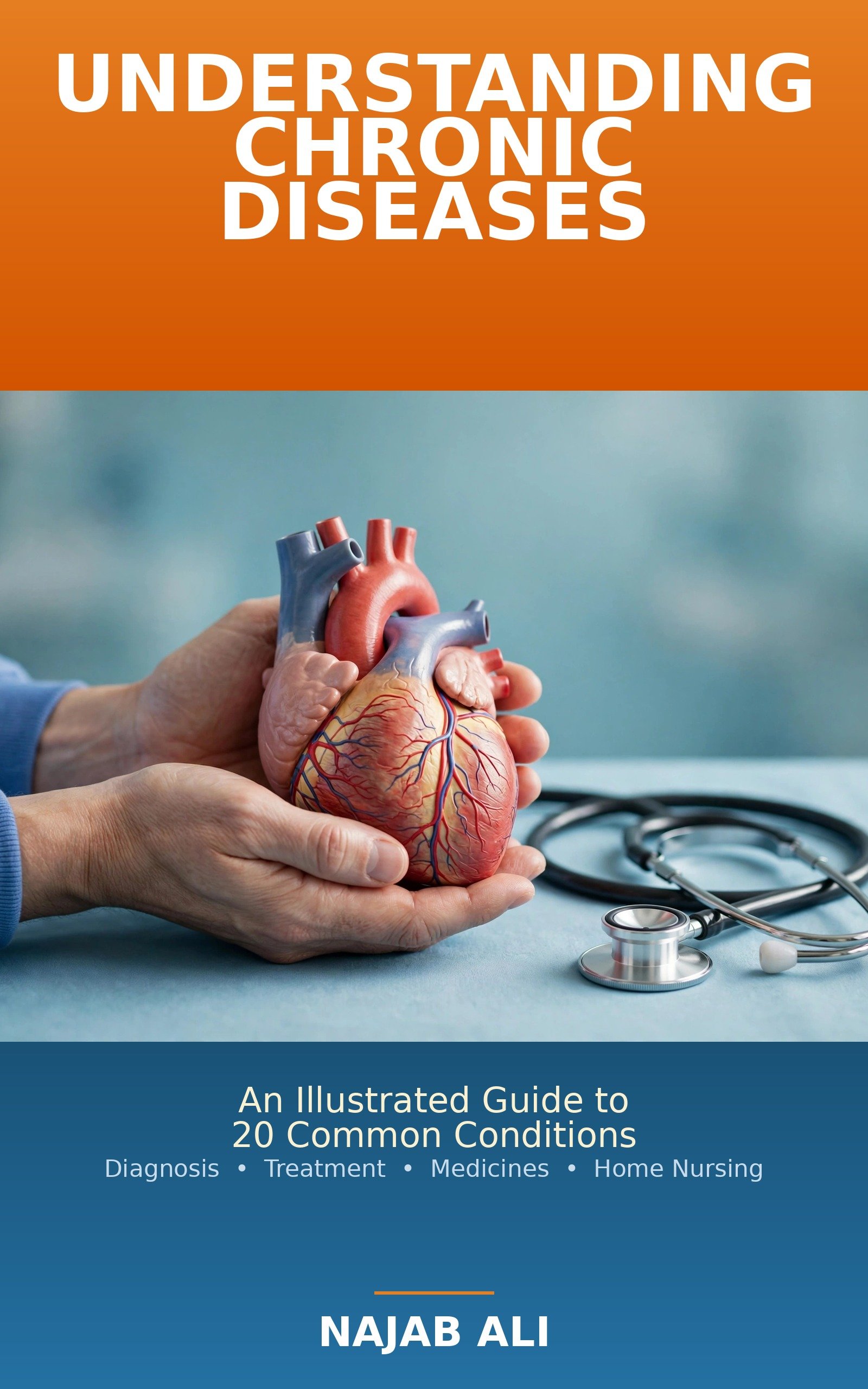
Understanding Chronic Diseases: An Illustrated Guide to 20 Common Conditions — book cover

Understanding Chronic Diseases: An Illustrated Guide to 20 Common Conditions

By NAJAB ALI

$12.99 Kindle eBook

An illustrated guide to 20 common chronic conditions — diabetes, high blood pressure, heart disease, asthma, stroke and more — with real organ photographs, plain-language explanations of diagnosis, treatment and medicines, and home nursing guidance for families.

View on Amazon
Contact UsChat on WhatsApp